
Fremont County Arrest History
Fremont County arrests may begin with the Sheriff, Cañon City Police, Florence Police, Colorado State Patrol, or another state or federal agency. The arresting agency writes the event report. Fremont County Detention staff create the intake, fingerprint, photograph, custody, charge, and bond snapshot when a person is booked at 100 Justice Center Road. The court later creates a different record if charges are filed.
An arrest history is not one fixed county file. The Jail Intakes feed covers recent posts, VINELink addresses current custody, an agency report tells the event narrative, court records show filed charges and disposition, and CBI's ICHC reflects fingerprint-supported Colorado history in its possession. Each source answers a different question.
Fremont Sheriff Signed-Form Rule
The FCSO Records Division requires a written, signed request and a copy of a state ID or driver license. Send it to records@fremontso.com, fax 719-276-5593, mail it to 100 Justice Center Road, Cañon City, CO 81212, or deliver it at the counter. Requests arriving after 3:00 p.m. count on the next business day.
FCSO Records Division
100 Justice Center Road
Cañon City, CO 81212
719-276-5521 or 719-276-5525
Written request plus ID
Most reports are generally available within 14 working days. Active or incomplete investigations may be delayed or withheld, and protected facts are redacted. CAD, 911 calls, and dispatch logs go to dispatch at 719-792-6411. Prepayment is required, and personal checks are not accepted.
Looking Up Fremont County Arrests
No one portal completes a Fremont County arrest lookup. Lead with the recent booking feed, then confirm each stage with the custodian that owns it.
- Check the official FCSO Jail Intakes feed for a recent post and the arresting agency.
- Use VINELink or call Intake/Booking at 719-276-5555 option 2 for current custody, bond, and holds.
- Request the narrative from FCSO Records, Cañon City Police, Florence Police, State Patrol, or the agency that made the arrest.
- Search the Colorado Judicial docket, then request the ROA or disposition from Fremont Combined Court.
- Use CBI Internet Criminal History Check for fingerprint-supported Colorado history, with its stated exclusions and reporting limits.
Which Fremont Agency Has It?
Use the arresting-agency label in the intake post as the routing key. FCSO Records uses records@fremontso.com and 719-276-5521 or 5525. Cañon City Police Records is at 161 Justice Center Road, records@canoncity.org, 719-276-5600 extension 5696. Florence Police is at 600 West Third Street and uses 719-784-3411 option 7. Colorado State Patrol reports remain with its Central Records Unit.
| Question | Official channel |
|---|---|
| What did officers report? | Arresting agency |
| Is the person still held? | VINELink or Intake/Booking |
| What was filed? | Fremont Combined Court |
| What does Colorado CHRI show? | CBI ICHC |
Do not borrow one city's fee schedule for another office. Each custodian sets its own process under Colorado criminal-justice records law.
Inside a Fremont County Arrest Record
Official Fremont booking channels can publish a name, intake date, arresting agency, charge or warrant basis, custody or release statement, and sometimes bond. FCSO warns that online bond can omit another case or hold. A photograph or full physical description was not confirmed as a promised field, and no universal Fremont mugshot-release policy was found.
| Booking identifier | Local intake reference when the channel exposes it |
|---|---|
| Booking date | Recent custody event, not the final case date |
| Arresting agency | Office that owns the incident narrative |
| Charges | Preliminary allegation or warrant basis |
| Bond | Snapshot that may omit cases or holds |
| Booking photo | Subject to CCJRA review; universal release is not promised |
| Release status | Custody snapshot best confirmed with Intake |
Read Fremont Jail Intake Tools
The official Jail Intakes feed presents recent booking posts without serving as a full archive.
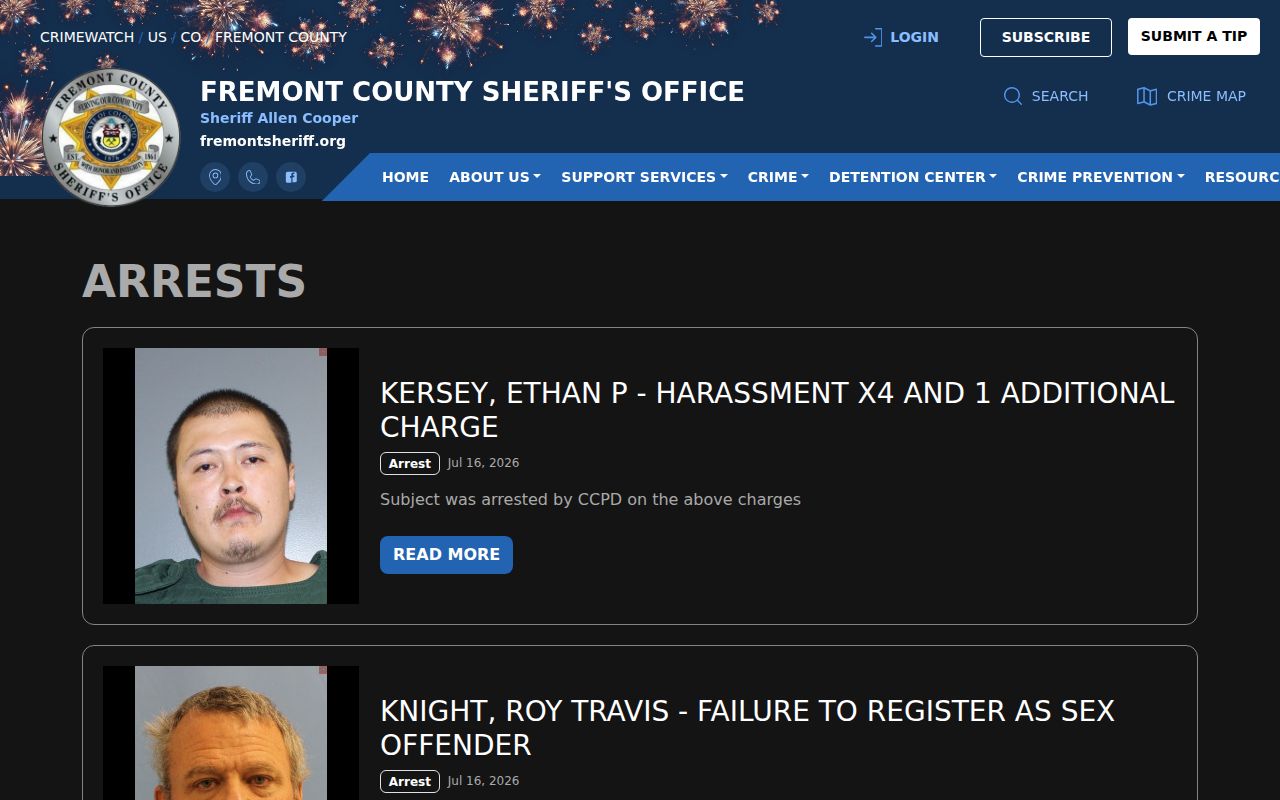
Use the post as a lead, then verify custody and court outcome.
The Sheriff inmate-locator route sends readers to VINELink and the booking phone.
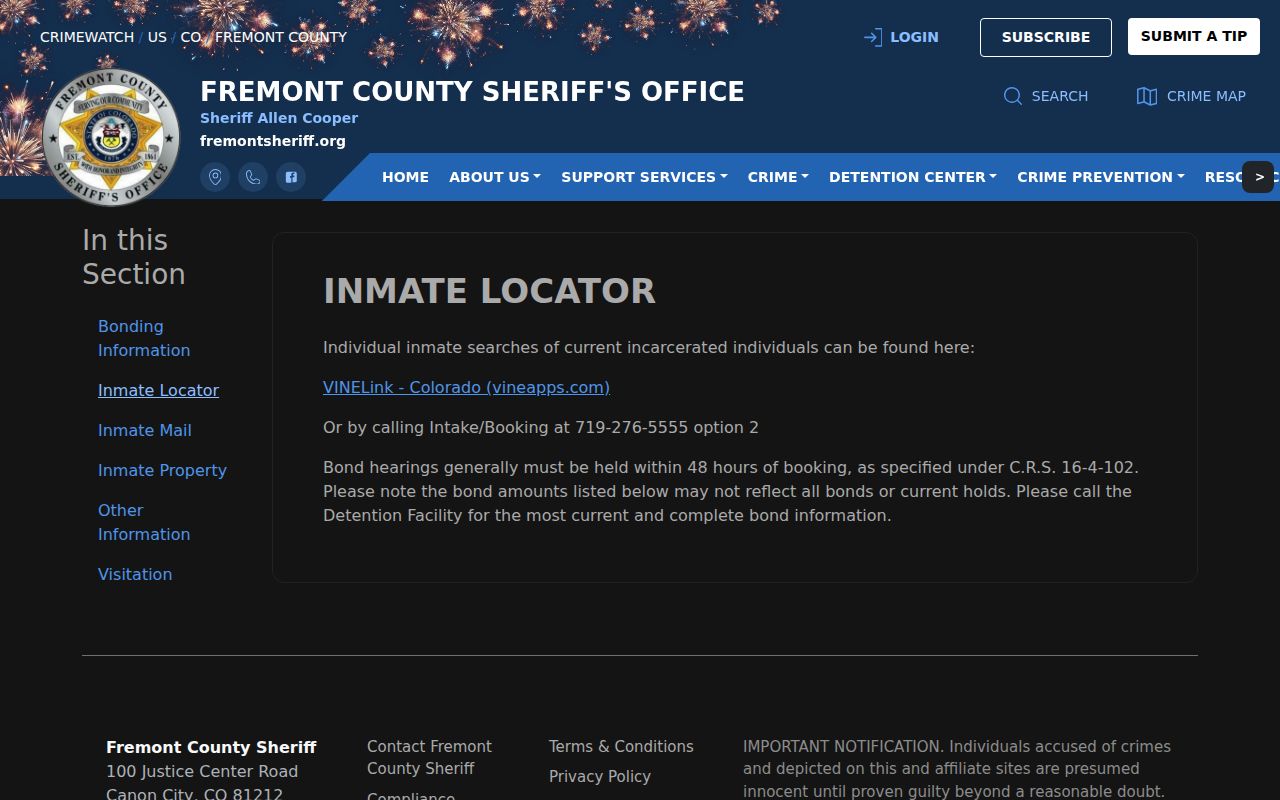
That second check matters because a recent post can remain after release.
Booking Logs and Recent Fremont Arrests
The FCSO Jail Intakes feed can show the arresting agency, charge or warrant basis, intake date, and sometimes a personal-recognizance release. It is a stream of recent posts, not a certified historic arrest index. Absence from the feed proves neither that an arrest never occurred nor that a person has no current hold.
VINELink supplies custody status and notifications. For the most complete current bond information, call Intake because an online amount may not account for every case or hold. Court staff, not detention staff, set bond. The official bond page explains cash, surety, and card channels.
Fremont Bond and Release Timing
Cash-equivalent bond is payable to Fremont County Combined Courts. Card payment may use GovPayNow with FCSO PLC A003K8, which is a payment routing code and not a court case number. A $30 booking and processing charge has stated exceptions and may be refunded after dismissal with proof. A separate $10 bond-processing charge can become debt but cannot keep someone confined after bond terms are met.
The stated six-hour release period begins after a personal-recognizance bond is ordered or a cash bond is ready, not at arrest. Extraordinary circumstances can alter that period, and electronic-monitor fitting may extend it to 24 hours. Call Intake before relying on a screen total or estimating release.
The official bonding instructions show those local rules.
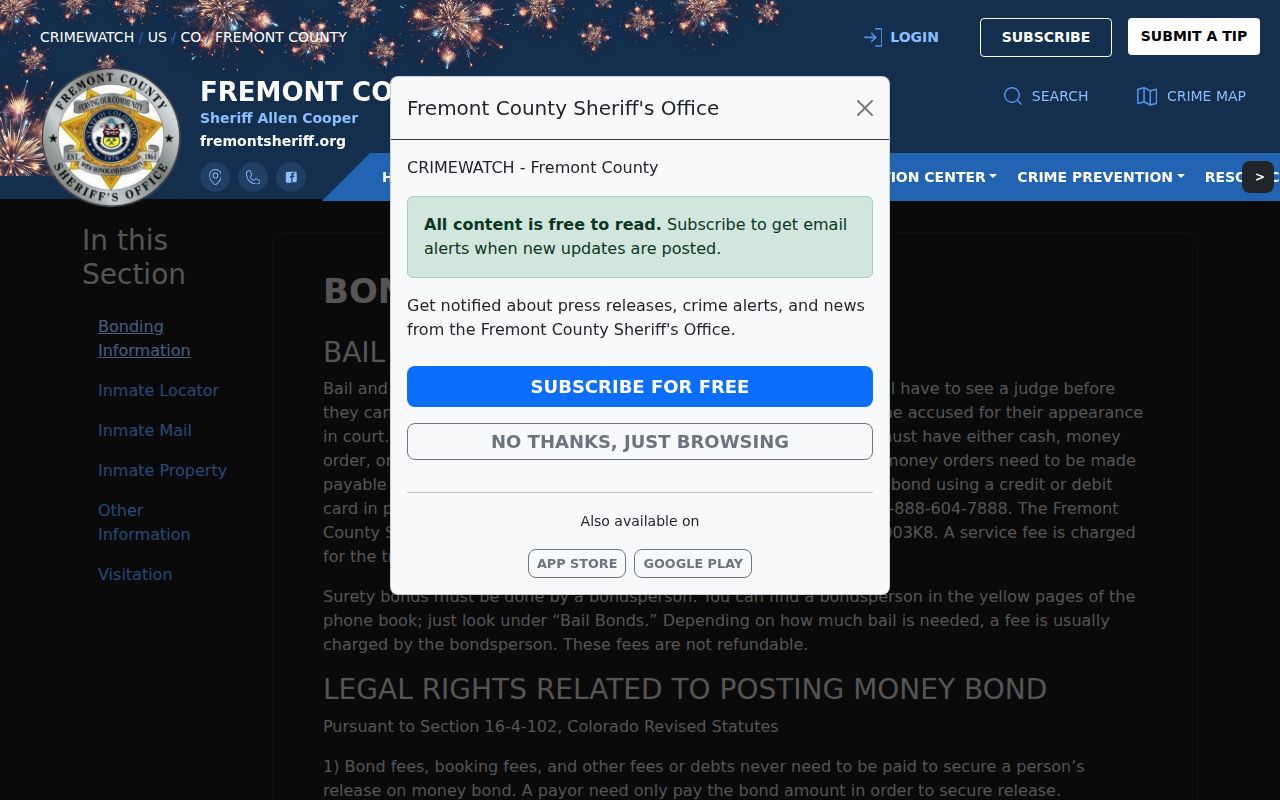
The screen is a process aid, while the court order and Intake confirmation control the real transaction.
Fremont Booking to CBI Chain
Detention fingerprints help identify the booked person and allow an arrest cycle to reach the Colorado Bureau of Investigation's CCIC repository. Later court dispositions are reported back to CBI, but a ticket without fingerprints or an incomplete disposition may not appear in the public ICHC result. CBI cannot provide the local officer narrative, which remains with the arresting office.
The FCSO records page explains the local request route.
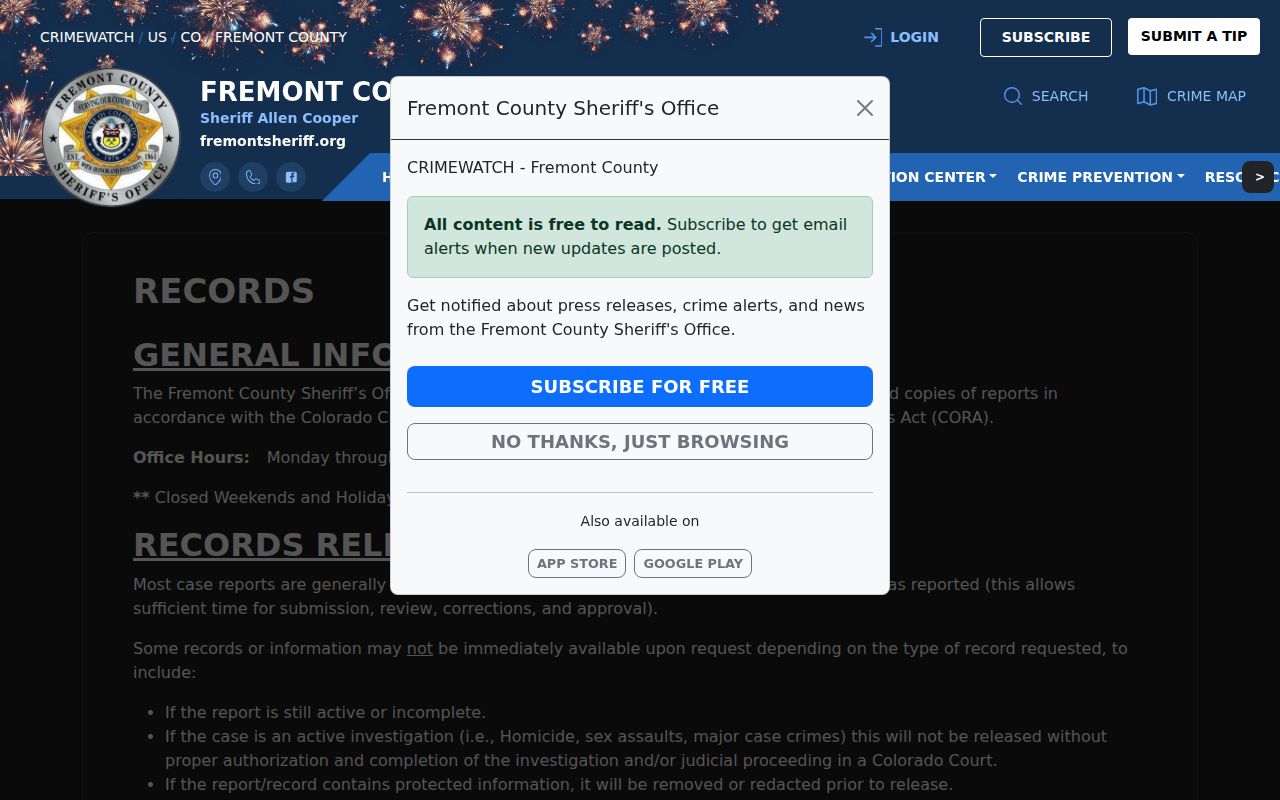
Its signed-form process fills the narrative gap left by a booking or statewide name check.
The official warrant feed offers another lead but is not a certified all-court search.
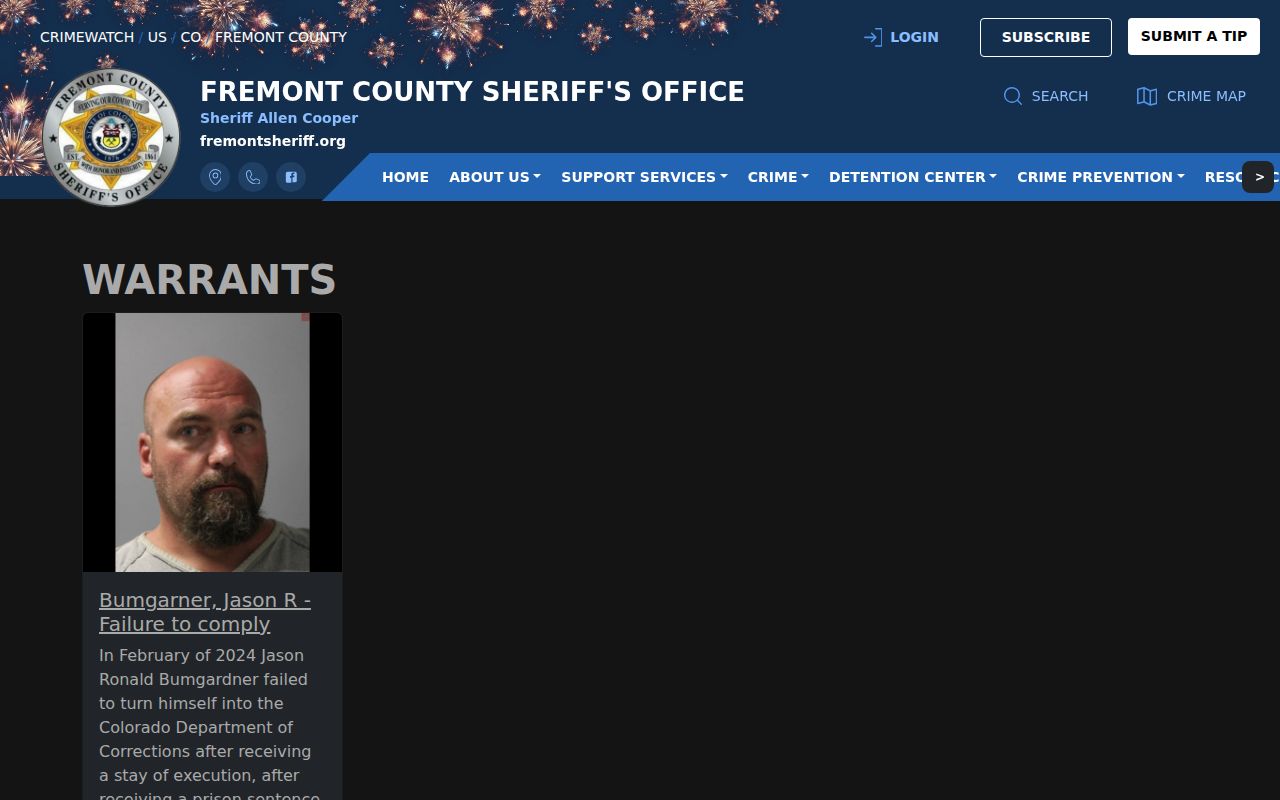
Fresh, sealed, municipal, or other bench warrants may still require direct agency and court checks.
Fremont Arrests Are Not Convictions
An arrest record proves that an agency took enforcement action or a jail recorded an intake. It does not prove guilt. The district attorney can file different charges, decline a charge, or later amend it. A court alone records dismissal, plea, verdict, and sentence. For that reason, match a booking lead to the Fremont County criminal court case before drawing a conclusion.
| Arrest Record | Conviction Record |
|---|---|
| Created by arresting agency and jail | Created by the court |
| Shows arrest or booking | Shows the judicial outcome |
| Lives with agency and detention custodian | Lives with the clerk and reported repositories |
| May lead to release, no filing, or dismissal | May lead to sentence, appeal, or sealing |
Note: A Fremont County arrest is an allegation and custody event, never proof that the person committed the charged act.
CBI history adds another layer, but it also has limits. It draws on fingerprint-supported records in the state repository and may omit tickets, summonses, sealed material, or a disposition that has not yet been reported. If the statewide result says a disposition is unknown, obtain the official Fremont County disposition and use CBI's update or challenge process. That correction route is more reliable than assuming the first charge remained unchanged.
Separate records can persist after a dismissal because the agency report, booking record, court file, and repository entry are maintained by different custodians. Colorado record sealing may restrict qualifying public records, but it does not mean all government copies are physically destroyed. The person seeking relief should use current Judicial Branch forms and list each agency required by the order. Until then, the sound reading practice is to place the arrest beside the court's final result and state clearly what each source says.
Always record the source date because custody screens, intake posts, agency reports, and court dispositions describe different moments in the same Fremont County matter.